Aug 17, 2026
By: NICOLE CAMPBELL

There are few things more sentimental than the family cottage.

There are also few things capable of turning otherwise perfectly reasonable siblings into people arguing over a 25-year-old aluminum fishing boat, who paid the hydro bill in 2019, and whether Grandpa’s cottage is “definitely worth at least $1.5 million.”

Welcome to selling the family cottage.

As a REALTOR® working in cottage country, I see versions of this situation more often than you might think. Mom and Dad — or Grandma and Grandpa — own the cottage for decades. Everyone spends summers there. Kids grow up there. Grandchildren learn to swim off the dock. Nobody really wants to talk about what will eventually happen to it.

And then the owners pass away. Suddenly, three or four family members inherit one cottage. And that is when things can get complicated.

The Cottage May Be Priceless to Your Family. Unfortunately, Buyers Don't Know That.

One of the hardest parts of selling a family cottage is separating sentimental value from market value.

To your family, this might be the place where:

  • Christmases were celebrated.
  • Kids learned to water-ski.
  • Grandpa built the bunkie himself.
  • Everyone's height is still marked on the kitchen doorway.
  • Entire summers were spent on the dock.

That history absolutely has value — emotionally.

But it doesn't necessarily add $300,000 to the sale price.

A buyer is looking at the shoreline, water quality, lot, road access, septic system, well or water source, condition of the cottage, renovations required, neighbouring properties and comparable sales. They're probably not assigning additional value because Uncle Dave caught a 7-pound bass there in 1997. And this is often where the first disagreement starts. One sibling remembers the cottage as the greatest property ever created. Another has been quietly Googling comparable sales.

Someone's neighbour sold their cottage for an astronomical amount during 2021 and now that number has somehow become part of the conversation.

And before you know it, everyone has a different opinion of what the cottage is worth.

Then Comes the Question: Who Has Been Paying for Everything?

This is another fun one. One sibling may have been cutting the grass for the past ten summers. Another has been paying the taxes. Someone replaced the dock. Someone else paid for the septic pump-out. One family member lives nearby and has essentially become the unpaid property manager, while another lives three hours away and visits twice a year.

Eventually, somebody says:

“Well, I've put a lot more money into this place than everyone else.”

And they're probably right. This is where cottage ownership between multiple family members can become difficult very quickly. Property taxes, insurance, hydro, propane, road maintenance, dock repairs, tree removal, septic systems and general cottage maintenance don't stop just because an estate is being settled. Somebody still has to look after the property. Somebody still has to pay the bills. And if the cottage takes months — or longer — to sell, those expenses continue.

Everyone Inherits the Cottage. Unfortunately, Everyone Also Inherits an Opinion.

Imagine four siblings inheriting a cottage.

Sibling #1 wants to sell immediately.

Sibling #2 thinks the family should keep it forever.

Sibling #3 wants to buy everyone else out but believes the cottage is worth considerably less than everyone else does.

Sibling #4 hasn't been to the cottage in six years but suddenly has extremely strong opinions about everything.

This is where selling an inherited cottage can become challenging.

Decisions that would normally involve one or two property owners can suddenly require several people to agree on:

  • The REALTOR®.
  • The listing price.
  • Repairs.
  • Cleaning.
  • Furniture.
  • What stays.
  • What goes.
  • Showing availability.
  • Offer price.
  • Closing date.

Even deciding who gets the old canoe can become an event. And when there are spouses, grandchildren and extended family quietly offering their opinions from the sidelines? Even better.

Meanwhile, the Cottage Is Sitting There.

This is the part families sometimes underestimate. While everyone is deciding what to do, the cottage doesn't stop aging. If it's vacant, that creates additional concerns.

Who's checking it after storms?

Who's making sure the heat is working?

Who's watching for leaks?

Who's clearing snow?

Who's opening it in the spring?

Who's maintaining the waterfront?

Who's making sure the insurance requirements for a vacant or seasonal property are being met?

A waterfront property that sits unattended for a year can look very different from one that has been regularly occupied and maintained. And depending on how long an estate takes to settle, you may also miss an important selling season.

In cottage country, timing matters.

A family can begin discussing selling in April, spend the summer trying to agree on what to do, finally list in October and then wonder where all the cottage buyers went. They're probably inside thinking about Christmas.

The Better Conversation Often Happens Before Anyone Passes Away

Nobody particularly enjoys talking to their parents about what happens to the cottage after they're gone. I understand that. But having that conversation while the current owners are alive and able to make decisions can save an enormous amount of stress later. Sometimes the best decision is keeping the cottage in the family. Sometimes one child genuinely wants it and has the financial ability to purchase it. Sometimes a clear cottage succession plan can be created. And sometimes the smartest decision is simply:

Sell the cottage.

That doesn't erase the memories. It doesn't mean the family didn't love the property. It means the current owners are making a decision themselves instead of leaving several people to make it later.

There Are Advantages to Selling the Cottage Before It Becomes an Estate Sale

When the original cottage owners sell the property themselves, they can often make the process considerably easier. They know the cottage. They know where the septic is located. They know when the roof was replaced. They remember who installed the dock. They know whether the water line freezes every February. They probably know where the survey is hiding. They can answer questions that become surprisingly difficult when children inherit a property they may only have visited recreationally. More importantly, the owners can decide how and when they want to sell. They can choose the REALTOR®. They can determine the listing strategy. They can prepare the property properly. They can sell during a strong cottage market rather than whenever probate happens to be completed. And they can decide what happens to the proceeds. That is considerably different from several beneficiaries trying to make those decisions together while also dealing with the loss of a parent.

What If You Want to Keep the Cottage in the Family?

Selling isn't automatically the answer. But if several people are going to own the cottage together, there should be a realistic conversation about how that will actually work.

Not:

“We'll all share it!”

That sounds lovely.

Talk about the less exciting stuff.

Who pays the property taxes?

How are repairs divided?

Who decides when a major renovation happens?

Can one family member rent it?

Can someone bring friends every weekend?

Who gets the August long weekend?

What happens if one owner wants out?

What happens if somebody can't afford their share anymore?

What happens when the next generation inherits their percentage?

A cottage that starts with two siblings can eventually be owned by six cousins.

And suddenly scheduling the May long weekend requires a spreadsheet.

If the cottage is intended to stay in the family long-term, speak with the appropriate lawyer and accountant and have a proper ownership and succession plan created. A handshake at Thanksgiving dinner is probably not enough.

If You Know the Cottage Will Eventually Be Sold, Start Planning Early

You don't necessarily have to put a For Sale sign up tomorrow. But you can start getting organized. Find the survey. Locate septic records. Gather permits. Understand the water source. Look at shoreline road allowance ownership if applicable. Deal with outstanding maintenance. Have a realistic conversation about value. Talk to your accountant about potential tax implications. Talk to your lawyer about estate and succession planning. And talk to a REALTOR® who actually understands waterfront and cottage properties. The cottage market is very different from selling a subdivision home. Shoreline, exposure, lake systems, access, septic systems, water sources, seasonal versus four-season use, road maintenance and even where the sun sets can dramatically affect value.

Sometimes Selling the Cottage Is Actually the Kindest Decision

This may sound strange coming from someone who sells cottages for a living, but I genuinely think families sometimes put too much pressure on themselves to “keep the cottage in the family.”

Your parents bought a cottage because they wanted their family to enjoy it. They probably didn't buy it hoping their children would spend the next 20 years arguing over property taxes and whose week it is in July. If keeping it works financially and everyone genuinely wants it — wonderful. But if nobody really wants the responsibility, selling the cottage doesn't erase its history. You still had the summers. You still have the photographs. You still have the stories. And someone else gets to start making their own memories there. Sometimes that is a perfectly good ending.

Thinking About What Happens to Your Family Cottage?

If your family owns a cottage in Kawartha Lakes, Trent Lakes, Bobcaygeon, Buckhorn, Fenelon Falls or the surrounding cottage country, it is worth understanding your options before you actually need to make a decision.

You don't have to be ready to sell.

Sometimes the first step is simply understanding what the cottage may be worth today, what buyers are looking for, and what should be addressed if a sale is likely in the next few years.

And trust me:

That conversation is usually much easier while everyone still likes each other.

...
Apr 22, 2026
By: NICOLE CAMPBELL

Lately, I’ve had quite a few calls from people looking to refinance their homes, asking if I can come out and do an appraisal for them.

It’s a great question — and honestly, a really common point of confusion.

While I do provide Opinions of Value for my clients regularly, that’s not the same thing as a formal appraisal, and it’s not something real estate agents are licensed to complete for lending purposes.

So I wanted to take a minute to break this down clearly — what each one is, who does them, and when you might need one over the other.


What Is an Opinion of Value?

An Opinion of Value is a professional estimate of what your property could sell for in the current market.

As a real estate agent, this is something I provide regularly for:

  • Homeowners preparing to sell
  • Estate situations and probate
  • Divorce or separation
  • General planning and decision-making

An Opinion of Value is based on:

  • Recent comparable sales
  • Current market conditions
  • Property features (location, size, condition, waterfront, etc.)
  • Buyer behaviour in your specific area

In cottage country, this also includes factors like:

  • Shoreline quality
  • Water access and exposure
  • Seasonal demand
  • Rural services (well, septic, road access)

👉 It’s a market-based, real-world value — what buyers are likely willing to pay.


What Is an Appraisal?

An Appraisal is a formal, regulated valuation completed by a licensed professional appraiser.

Appraisers are trained and certified through organizations like Appraisal Institute of Canada and follow strict guidelines and reporting standards.

Appraisals are typically required for:

  • Mortgage approvals
  • Refinancing
  • Lending and financing decisions
  • Legal or court-related matters

An appraisal provides:

  • A detailed written report
  • A defensible, unbiased value
  • Documentation that meets lender and legal requirements

👉 It’s a formal valuation used for financing and legal purposes.


The Key Difference

Opinion of Value

  • Completed by a real estate agent
  • Based on current market activity
  • Used for pricing, planning, and strategy
  • Reflects what buyers are actively paying

Appraisal

  • Completed by a licensed appraiser
  • Follows strict industry standards
  • Required by banks and lenders
  • Used for financing and legal documentation

When Do You Need Each One?

You likely need an Opinion of Value if:

  • You’re thinking about selling
  • You want to understand your home’s current market position
  • You’re handling an estate or planning next steps

You will need an Appraisal if:

  • You’re refinancing or obtaining a mortgage
  • A lender or bank requires it
  • It’s part of a legal or court process

Can One Replace the Other?

Not exactly.

An Opinion of Value cannot be used in place of an appraisal for lending purposes, and an appraisal isn’t always the best tool for pricing a home to sell.

In many cases, they actually work together:

  • The appraisal satisfies the bank
  • The Opinion of Value helps you understand how to position your property in the market

My Role in the Process

I provide Opinions of Value regularly for clients across Bobcaygeon, Trent Lakes, and Kawartha Lakes — whether you’re preparing to sell, navigating an estate, or simply exploring your options.

While I’m not a licensed appraiser, I work in this market every day and can offer insight into what buyers are actually paying right now, which is key when it comes to pricing and strategy.

If you do need an appraisal, I’m always happy to point you in the right direction and help you understand what to expect.


Final Thoughts

Both an Opinion of Value and an appraisal have their place — it just comes down to using the right one for your situation.

If you’re not sure where to start, feel free to reach out. I’m always happy to help guide you in the right direction.


...
Apr 11, 2026
By: NICOLE CAMPBELL

What to Expect — and How I Can Help Every Step of the Way

Handling the sale of an estate property is very different from a typical real estate transaction. Whether you're an executor, a family member, or working alongside a lawyer, there are often added layers — legal, emotional, and logistical.

In cottage country, those layers can be even more complex.

Most estate clients I work with don’t live locally. They’re navigating a significant life event while trying to manage a property from a distance — often unsure where to start.

That’s where I come in.


Starting With an Opinion of Value

Many estate situations begin with a request for an Opinion of Value — whether that’s for probate, estate equalization, or legal purposes.

I regularly work with lawyers, executors, and families to provide accurate, well-supported valuations based on current market conditions here in Bobcaygeon, Trent Lakes, and the surrounding Kawartha Lakes area.

Even at this early stage, I can begin to flag:

  • Market trends and timing considerations
  • Property-specific challenges (septic, well, access, condition)
  • Potential value improvements before listing

Getting insight early can make the entire process smoother down the road — but I’m happy to step in at any point.


Estate Properties in Cottage Country Are Unique

In this area, many estate properties aren’t just homes — they’re cottages that have been in the family for generations.

When parents pass away, it’s common for multiple children to inherit the property. That can bring:

  • Emotional attachment and differing opinions
  • Uncertainty about whether to keep or sell
  • Challenges coordinating decisions across families

These situations require more than just real estate knowledge — they require patience, clear communication, and a steady, supportive approach.

I help guide those conversations and keep things moving forward in a way that feels manageable for everyone involved.


A Hands-On Approach (Especially for Out-of-Town Clients)

Most estate sales come with a long to-do list — and for families who don’t live nearby, that list can feel overwhelming.

I offer a hands-on, flexible approach, tailored to your situation.

This can include coordinating:

  • Professional cleaners
  • Junk removal and donation drop-offs
  • Estate sale companies and antique buyers
  • Local trades for repairs or property prep

I can also:

  • Visit and check on the property regularly
  • Coordinate access (keys, lockboxes, contractors)
  • Be your “boots on the ground” throughout the entire process

Some clients want full support, others prefer guidance — I can step in wherever you need me.


Common Challenges (And How I Help Navigate Them)

Estate properties often come with a few consistent challenges:

Deferred maintenance
Properties may not have been updated in years — I help identify what matters (and what doesn’t) before listing.

Logistics & distance
Managing everything from out of town can be difficult — I handle the local coordination.

Contents & personal belongings
Sorting through a lifetime of belongings is emotional and time-consuming — I connect you with the right resources to simplify it.

Feeling overwhelmed
This is the biggest one. My role is to break things down into manageable steps and guide you through each one.


When Should You Sell?

I’m often asked whether to wait until probate is complete or start earlier.

The truth is — I can get involved at any time.

In many cases, starting the conversation early helps with planning, even if the sale happens later.

I also help guide:

  • Timing the market (especially important in seasonal cottage country)
  • Pricing strategy based on current conditions
  • Preparation vs. selling as-is decisions

Every situation is different, and we tailor the approach accordingly.


What to Expect: Step-by-Step

Here’s a simple breakdown of how the process typically unfolds:

  1. Initial Conversation
    We discuss the property, your situation, and your goals.
  2. Opinion of Value
    A detailed, market-based valuation (if needed for probate or planning).
  3. Property Assessment
    Identifying any prep, clean-up, or improvements that could help the sale.
  4. Coordination & Preparation
    I help organize cleaning, removal, repairs, and staging (if appropriate).
  5. Pricing & Strategy
    We position the property based on the current market and property type.
  6. Listing & Marketing
    Professional photography, online exposure, and targeted marketing.
  7. Offers & Negotiation
    Navigating offers with care and clarity.
  8. Closing Support
    Ensuring everything comes together smoothly through to completion.

A Supportive, Knowledgeable Approach

Selling an estate property is rarely just about real estate.

It’s about handling a transition — often during an emotional time — while making informed, confident decisions.

My goal is to make the process feel clear, supported, and manageable, whether you’re local or coordinating everything from afar.


Thinking About Selling an Estate Property?

If you’re navigating an estate situation in Bobcaygeon, Trent Lakes, or Kawartha Lakes, I’m here to help — whether you’re just starting with an Opinion of Value or ready to move forward with a sale.

Reach out anytime to start the conversation.

...
Mar 10, 2026
By: NICOLE CAMPBELL

Moving From the City?

10 Things Toronto Buyers Should Know Before Buying in the Kawarthas


Every year, more buyers from Toronto and the GTA discover what locals already know — the Kawartha Lakes region offers an incredible lifestyle. From waterfront cottages and quiet country homes to vibrant small towns like Bobcaygeon and Lakefield, it’s a place where people can truly slow down and enjoy nature.

However, buying property in cottage country is very different from buying in the city. Rural homes come with unique considerations that many buyers don’t think about until they’re already under contract.

If you’re considering buying in the Kawarthas, here are 10 important things you should know before making the move.


1. Septic Systems and Holding Tanks Are Common

Unlike city homes connected to municipal sewer systems, many properties in the Kawarthas rely on private septic systemsor holding tanks to manage wastewater.

A septic system is the most common setup for year-round homes. It consists of a tank and a leaching bed that naturally filters wastewater into the soil. When properly maintained, septic systems can last 20–30 years or more.

A holding tank, on the other hand, simply stores wastewater and must be pumped regularly. Holding tanks are often found on smaller lots, older cottages, or properties where the soil conditions don’t allow for a septic bed.

Pros of Septic Systems

  • Lower long-term maintenance costs

  • Can last decades with proper care

  • No regular pumping required if functioning properly

Cons of Septic Systems

  • More expensive to replace (often $20,000–$40,000+)

  • Must be carefully located on the property

  • Requires proper inspections during purchase

Pros of Holding Tanks

  • Lower installation cost

  • Useful on smaller or environmentally sensitive lots

Cons of Holding Tanks

  • Must be pumped regularly (sometimes monthly depending on usage)

  • Ongoing pumping costs

  • Not ideal for large families or year-round use

When purchasing rural property, it’s important to have the system inspected and properly documented during the buying process.


2. Well Water (and Lake Water) Are Common Water Sources

Many homes in cottage country get their water from private wells, and there are two main types buyers should understand.

A drilled well is deeper and typically drilled into bedrock. These wells tend to provide a more reliable and consistent water supply and are the most common for newer homes.

A dug well is shallower and often lined with concrete rings. While many dug wells still function perfectly well, they can sometimes be more affected by seasonal water levels or surface conditions.

Another water source that remains fairly common for waterfront cottages is drawing water directly from the lake. When paired with a proper filtration system and UV light system, lake water can be perfectly safe for household use. Many long-time cottage owners rely on this setup successfully.

Regardless of the water source, buyers typically perform a water potability test during the purchase process to ensure the water is safe to drink.


3. Internet Availability Can Vary


While internet service has improved dramatically in recent years, not every rural property has the same level of connectivity.

If working remotely or streaming services are important to you, it’s worth confirming which providers service the area. Many homes now have access to Starlink, Xplornet, or fibre services, but availability varies by location.


4. Waterfront Properties Require Additional Due Diligence


Waterfront homes are some of the most desirable properties in the Kawarthas, but they come with unique considerations.

Buyers should understand:

  • Shoreline ownership

  • Dock regulations

  • Water depth (this can affect weeds!)

  • Flood zones

  • Shoreline protection rules (environmental & conservation areas)

Each lake can have different characteristics, which is why working with a local real estate professional familiar with waterfront properties is extremely helpful.


5. Winter Road Maintenance Matters

Some rural and cottage properties are located on seasonal or privately maintained roads.

Before purchasing, buyers should confirm:

  • If the road is municipally maintained year-round

  • If there are shared road maintenance agreements

  • Who is responsible for snow removal

For buyers planning to live in the home year-round, this can be an important factor.


6. Heating Systems Are Different from City Homes

In the city, many homes rely on natural gas furnaces, but rural homes often use different heating sources such as propane, electric heat, heat pumps, or wood stoves.

Here is a rough idea of common systems and their typical costs:

Propane Furnace

  • Installation: $6,000 – $12,000

  • Cost can vary if existing duct work exists

  • Ongoing fuel costs vary but are generally moderate for rural homes

  • Very common for year-round properties

Electric Baseboard Heating

  • Installation: $1,500 – $4,000

  • Low installation cost but higher monthly operating costs

Heat Pumps

  • Installation: $8,000 – $18,000 depending on system size

  • Very efficient and growing in popularity, offers both heating & cooling

  • Easy to install where you don't have duct work (also works to connect to existing ducts)

  • Often combined with backup heating systems

Wood Stoves

  • Installation: $3,000 – $8,000

  • Very economical if you have access to wood

  • Requires maintenance, installation and proper insurance approval

Understanding the heating system and operating costs is important when budgeting for rural living.


7. Insurance for Rural and Waterfront Homes Can Be Different

Insurance for rural or waterfront homes can be very different from typical city homes.

Many buyers initially contact large city-based insurance providers, only to discover that premiums can be much higher or coverage can be more limited. These companies often aren’t as familiar with rural properties, wells, septic systems, waterfront risks, or wood heat.

In many cases, working with a local insurance company or broker who regularly insures cottage country properties can result in better coverage and more reasonable rates. Local providers understand the realities of rural living and are often better equipped to properly insure these types of homes.

Getting an insurance quote early in the buying process is always recommended. Fun fact is cottage country insurance has gone up in the last 5 years due to the extreme weather and insurance claims being made.


8. Not All Areas Have Municipal Garbage & Recycling Pickup

Another difference buyers often discover when moving from the city to cottage country is that not every municipality provides curbside garbage and recycling pickup.

In some areas, residents are required to bring their garbage and recycling to municipal transfer stations or landfill depotsinstead of placing bins at the end of the driveway.

For example, properties located within the Trent Lakes Municipality area — which includes parts of Pigeon Lake, Big Bald Lake, Little Bald Lake, Buckhorn Lake, and Crystal Lake — often require homeowners to bring garbage and recycling to designated municipal facilities.

For many full-time residents this quickly becomes part of the routine, but it’s something buyers should be aware of when considering different areas around the Kawarthas.

This is one of the many reasons working with a local real estate professional is valuable. A local agent can help explain the differences between municipalities and provide guidance on services like garbage pickup, road maintenance, utilities, and other rural property considerations.


9. Each Lake Has a Different Lifestyle

Not all lakes are the same.  You might see one waterfront property 30% higher then one on another lake and wonder why... there is an explanation often. It is important to share with your realtor how you live and what your intentions with the property may be. 

Some lakes are ideal for boating and watersports, while others are quieter and better suited for kayaking, fishing, or relaxing.

Popular lakes in the Kawarthas include:

  • Sturgeon Lake

  • Pigeon Lake

  • Balsam Lake

  • Buckhorn Lake

  • Lower Buckhorn Lake

  • Crystal Lake

  • Big Bald Lake (my personal fav!)

  • Little Bald Lake

Understanding what each lake offers can help buyers find the right property for their lifestyle.


10. The Kawarthas Offer an Incredible Lifestyle

Beyond the homes themselves, the Kawartha Lakes region offers a lifestyle that’s hard to match.

From charming towns like Bobcaygeon, Fenelon Falls, Buckhorn and Lakefield, to beautiful lakes, trails, and local restaurants, many buyers quickly realize why so many people fall in love with the area. Some towns offer more services, shops or year round access. I proudly live in Bobcaygeon! My favourite parts of this famous small waterfront town is the amazing community, small shops & restaurants and don't forget the Trent Severn Waterway Lock 32 connecting Sturgeon Lake & Pigeon Lake. It is quaint but still has so much to offer and very scenic! 

For families, retirees, and remote workers alike, the Kawarthas provide a rare combination of nature, community, and space to breathe.


Thinking About Buying in the Kawarthas?

If you’re considering purchasing a home or cottage in the Kawartha Lakes region, I’d be happy to help guide you through the process.

As a local real estate professional who works extensively with rural and waterfront properties, I can help you navigate the unique considerations that come with buying in cottage country.

...
Mar 06, 2026
By: NICOLE CAMPBELL

When You Might Need One and How I Can Help

When You Might Need One and How I Can Help

In real estate, there are many situations where someone needs to understand the current value of a property without necessarily listing it for sale right away. This is where an Opinion of Value becomes incredibly helpful.

As a real estate professional serving Bobcaygeon, Kawartha Lakes, and the surrounding cottage country, I regularly prepare Opinions of Value for homeowners, families, lawyers, and estate representatives who need a professional understanding of what a property may be worth in today’s market.

Let’s break down what they are and when they are commonly used.


What Is an Opinion of Value?

An Opinion of Value (OOV) is a professional estimate of what a property could reasonably sell for in the current real estate market. It is prepared by a licensed real estate professional using:

  • Recent comparable property sales

  • Current listings and market competition

  • Local market trends

  • Property features, condition, and location

Unlike a formal appraisal, an Opinion of Value focuses on real-world market activity and buyer behaviour to estimate a likely sale price.

It provides homeowners or decision-makers with a realistic picture of the property's market value today.


When Would Someone Need an Opinion of Value?

There are many situations where an Opinion of Value is helpful or required.

Estate & Probate Situations

When someone passes away, families or executors often need documentation showing what the property may be worth. This helps with estate planning, probate, and decision-making for beneficiaries.

Divorce or Separation

Lawyers frequently request property value estimates when couples are dividing assets.

Financial Planning

Homeowners sometimes want to understand the current value of their property for financial planning, refinancing discussions, or long-term investment decisions.

Pre-Listing Planning

Many homeowners want to understand what their home may be worth months or even years before selling. This allows them to plan renovations, timing, or future moves.

Family Property Transfers

Sometimes families transfer cottages, homes, or land between relatives and need an objective estimate of value.


Opinion of Value vs. Appraisal

Many people ask about the difference between an Opinion of Value and a formal appraisal.

An appraisal is typically required by lenders for mortgage purposes and is prepared by a certified appraiser.

An Opinion of Value is prepared by a licensed real estate professional and focuses specifically on what buyers are currently paying for similar properties in the local market.

Because real estate agents work directly with buyers and sellers every day, we often have a very strong understanding of what a property would realistically sell for.


Why Local Market Knowledge Matters

Real estate values can vary dramatically depending on location.

For example in Kawartha Lakes and cottage country, value can be impacted by factors such as:

  • Lake access or waterfront location

  • Seasonal vs year-round road access

  • Municipal services vs well and septic

  • Proximity to Bobcaygeon or other communities

  • Shoreline quality and boating access

  • Property condition and updates

Understanding these nuances is critical when determining an accurate market value.


How I Prepare an Opinion of Value

When I prepare an Opinion of Value, I take the time to thoroughly review the property and the surrounding market.

This typically includes:

• A property visit or review of the home and property features
• Research of recent comparable sales in the immediate area
• Review of current listings and market competition
• Analysis of current market trends in Kawartha Lakes
• A written summary outlining the property's estimated market range

My goal is to provide clear, honest insight so homeowners and families can make informed decisions.


A Service I Offer to My Clients

I regularly prepare Opinions of Value for:

  • Homeowners considering selling in the future

  • Families handling estates

  • Lawyers and financial planners

  • Clients planning long-term real estate decisions

In some cases these are provided as part of a listing consultation, and in other situations they are prepared as a stand-alone professional service when a formal value estimate is required.


Thinking About the Value of Your Property?

If you’re wondering what your home, cottage, or land may be worth in today’s market, I would be happy to help.

Whether you're planning to sell soon, planning for the future, or simply need clarity, an Opinion of Value can provide the insight you need.

📍 Serving Bobcaygeon, Kawartha Lakes, and surrounding cottage country communities

Feel free to reach out anytime to start the conversation.

...
Feb 09, 2026
By: NICOLE CAMPBELL

A Family-Friendly Pigeon Lake Community with Municipal Water

Alpine Village & Pirates Glen, Trent Lakes: A Family-Friendly Pigeon Lake Community

Alpine Village and Pirates Glen are two long-established cottage-style subdivisions located in the Municipality of Trent Lakes. Often discussed together due to their proximity and shared amenities, these communities are part of a Pigeon Lake waterfront area and are especially well known for being affordable, family-friendly, and well-serviced by cottage-country standards.

These neighbourhoods have become increasingly popular with buyers seeking value, community, and year-round usability—without the price tag of direct waterfront ownership.


A Brief History of Alpine Village & Pirates Glen

Both Alpine Village and Pirates Glen were originally developed as seasonal cottage communities, providing families with an accessible way to enjoy life on Pigeon Lake. Over the years, many cottages have been winterized, renovated, or rebuilt, allowing the areas to gradually evolve into mixed seasonal and full-time communities.

Since COVID, this transition has accelerated. More owners now live here year-round, bringing greater consistency, stronger community ties, and improved upkeep across the neighbourhoods.


What These Communities Are Like Today

Today, Alpine Village and Pirates Glen feel active, welcoming, and noticeably family-oriented. Because homes here are generally more affordable than other waterfront or near-water communities, the area attracts young families, first-time buyers, and long-term residents.

You’ll often see kids playing outdoors, neighbours walking dogs, and families using the parks and water access throughout the warmer months. Roads are fully paved, making year-round access easier and more reliable than in many cottage subdivisions.


Municipal Water: A Major Advantage

One of the standout features of Alpine Village and Pirates Glen is municipal drinking water service—a rarity in rural cottage country.

For buyers, this means:

  • No private well maintenance

  • More predictable water quality

  • Easier planning for renovations or rebuilds

  • Added peace of mind for families and year-round living

  • Higher property taxes to account for the municipal water

This alone makes these communities especially appealing to downsizers, retirees, and families transitioning from town or city living. *NOTE in extremely warm winters owners have run out of water before.


Pigeon Lake Access, Docking & Parks

While not every property is waterfront, the communities are part of the broader Pigeon Lake waterfront area and offer shared amenities that enhance lake access.

Residents benefit from:

  • Paid docking options available to local residents only

  • Two private parks designated for residents only

  • Access to Pigeon Lake for boating, swimming, and fishing

These shared spaces play a big role in community life, especially during summer months, and provide lake enjoyment without the cost or maintenance of private shoreline ownership.


Schools, Bus Routes & Family Appeal

Another major draw is location within the Bobcaygeon school district, including school bus routes servicing the area. This makes Alpine Village and Pirates Glen particularly attractive to families who want a cottage-country lifestyle while remaining connected to local schools and services.

Combined with paved roads and municipal water, these neighbourhoods offer a level of practicality that’s often hard to find in rural lake communities.


Homes & Architectural Variety

Housing throughout Alpine Village and Pirates Glen is diverse and reflects decades of gradual development.

You’ll find:

  • Original three-season cottages

  • Updated and winterized cottages

  • Modest year-round homes (with some directly on Pigeon Lake)

  • Occasional newer builds replacing older structures

Lot sizes are generally manageable, keeping maintenance reasonable and reinforcing the area’s easy-living appeal.


Municipal Services & What to Know

It’s important for buyers to understand that while the communities are well serviced, there is no municipal garbage pickup. Residents typically use local transfer stations or private disposal services—common in many cottage-country areas but worth factoring into daily routines.


Who Typically Lives Here

Alpine Village and Pirates Glen commonly attract:

  • Young families with children

  • First-time cottage or home buyers

  • Full-time residents priced out of waterfront markets

  • Downsizers seeking simplicity with services

The demographic mix contributes to a lively yet grounded community, especially compared to more retiree-focused developments.


Is Alpine Village or Pirates Glen Right for You?

These communities are well suited for buyers who:

  • Want access to Pigeon Lake without owning waterfront

  • Are looking for a family-friendly environment

  • Value municipal water and paved roads

  • Want school access and bus routes

  • Prefer affordability and shared amenities

They may not appeal to buyers seeking luxury finishes or resort-style amenities, but for those wanting real community, practicality, and lake-country living, Alpine Village and Pirates Glen offer outstanding value in the Bobcaygeon area.

...
Feb 05, 2026
By: NICOLE CAMPBELL

A Cottage Community With Lake Access & Year-Round Appeal

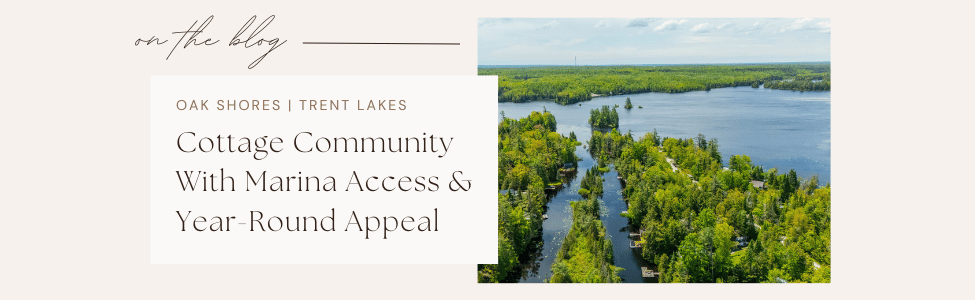
Oak Shores, Trent Lakes: Cottage Community With Marina Access & Year-Round Appeal

Oak Shores Estates is a well-known lakeside community in the Municipality of Trent Lakes, valued for its water access, strong community feel, and evolving mix of seasonal and full-time residents. Unlike highly polished lifestyle subdivisions, Oak Shores leans into a classic cottage-country identity, offering a more relaxed, organic neighbourhood that has steadily transitioned toward year-round living.

Situated around both Little Bald Lake and Big Bald Lake, Oak Shores appeals to buyers who want lake access, space, and community amenities without the price tag of premium waterfront.


A Brief History of Oak Shores Estates

Oak Shores was established as a recreational cottage community, with many original properties built as three-season retreats. Over time — and particularly in the years following COVID — the area has seen a noticeable shift toward four-season use, with more owners renovating, rebuilding, or converting cottages into year-round homes.

Unlike planned developments built all at once, Oak Shores grew gradually, resulting in varied lot sizes, winding roads, and a diverse mix of housing styles. This evolution has helped preserve its laid-back cottage atmosphere while allowing the community to adapt to changing lifestyles.


What Oak Shores Is Like Today

Today, Oak Shores is a hybrid community — part seasonal cottage area, part year-round neighbourhood. While summer remains the most active season, there are significantly more full-time residents than in the past, bringing more consistency, community engagement, and year-round upkeep.

The pace here is slower and more informal than newer subdivisions. Roads are quieter, neighbours tend to know one another, and the focus is on outdoor living, boating, and enjoying the natural setting. 


Lakes, Water Conditions & What Buyers Should Know

Both Little Bald Lake and Big Bald Lake are known for being weedier lakes, particularly in warmer months. This is an important consideration for buyers — especially those expecting deep, clear swimming conditions.

That said, these lakes remain popular for:

  • Pontoon boating

  • Fishing

  • Kayaking and canoeing

  • Casual swimming from select areas

Lake levels can vary based on the Trent Severn Waterway, influenced by precipitation and watershed conditions. Buyers should understand that water access and shoreline appearance may change throughout the year. There is no municipal garbage or recycling pick up in Trent Lakes, however all the roads (except Fire Routes) are municipally maintained (& plowed). 


Marinas & Boat Launch Access

One of Oak Shores’ strongest features is its access to boating infrastructure, even for properties that are not directly on the lake.

The community offers:

  • A marina on Little Bald Lake with a paid boat launch, making it easy for residents to get on the water without owning waterfront

  • A municipal boat launch onto Big Bald Lake, accessible nearby for larger watercraft and trailered boats

This setup is ideal for buyers who want boating access without the cost and maintenance of a private dock.


The Community Centre & Shared Amenities

Oak Shores also features a community centre, which acts as a gathering place for residents and seasonal owners alike. While more modest than resort-style clubhouses, it plays an important role in fostering connection through meetings, events, and community-led activities.

This sense of shared ownership and involvement is a big part of what draws people to Oak Shores — it feels neighbourly, familiar, and welcoming. 


The Miskazibi River Corridor

An additional natural feature in the area is the Miskazibi River, which enters from the highway and winds its way down toward the lakes. Some homes and cottages are located along this river corridor.

It’s important for buyers to understand:

  • These properties are not lake-accessible by boat

  • Water levels fluctuate significantly

  • The river is primarily scenic rather than functional

In certain seasons and conditions, parts of the river may allow for canoeing or kayaking, but it is generally appreciated more for its natural beauty and setting than for regular water use.


Homes & Architectural Variety

Housing in Oak Shores is highly varied, which is part of its charm.

You’ll find:

  • Original three-season cottages

  • Updated and winterized cottages

  • Modest year-round homes

  • Newer custom builds on select lots

There is no single architectural style here, and buyers should expect a mix of ages, sizes, and finishes. This variety allows for a wider range of price points compared to more uniform communities.


Who Typically Lives in Oak Shores

Oak Shores attracts:

  • Full-time residents seeking affordability and space

  • Retirees and semi-retirees

  • Seasonal cottage owners

  • Buyers transitioning from city life to a quieter pace

  • FUN FACT* I grew up cottaging in this area AND my spouse & I have built 2 custom homes in this neighbourhood 

Since COVID, the increase in year-round residents has strengthened the community while still preserving its cottage-country roots.


Is Oak Shores Right for You?

Oak Shores Estates is well suited for buyers who:

  • Want lake access without owning waterfront

  • Appreciate a relaxed, cottage-style community

  • Are comfortable with natural lake conditions

  • Value boating amenities and shared spaces

  • Want flexibility between seasonal and year-round living

It may not be ideal for buyers seeking pristine swimming conditions, uniform streetscapes, or luxury amenities — but for the right person, Oak Shores offers authentic Kawartha living with strong community ties.

...
Feb 03, 2026
By: NICOLE CAMPBELL

Luxury Subdivision with Marina Living on Pigeon Lake

Port 32, Bobcaygeon: A Lifestyle Community on Pigeon Lake

Port 32 is one of Bobcaygeon’s most recognizable and established communities, known for its thoughtful planning, mature landscaping, and lifestyle-driven design. Located just minutes from the village core and directly connected to the Trent–Severn Waterway via Pigeon Lake, Port 32 offers a unique blend of convenience, community, and low-maintenance living.

Designed as an adult lifestyle community, Port 32 appeals to buyers who want the charm of cottage country without the work that often comes with traditional waterfront ownership.


A Brief History of Port 32

Port 32 was developed over multiple phases (400 homes total) rather than all at once, which is one of the reasons the neighbourhood feels so established today. Instead of uniform construction, the community evolved gradually, allowing trees to mature, landscaping to settle in, and architectural styles to feel cohesive rather than cookie-cutter.

The neighbourhood was carefully planned around shared green space, walking routes, and the marina and clubhouse area — encouraging both privacy at home and connection within the community.


What Port 32 Is Like Today

Today, Port 32 is best described as polished, peaceful, and intentional. Streets are quiet and walkable, homes are well spaced, and there is a strong sense of pride of ownership throughout the neighbourhood.

One of the biggest draws is that most properties are not directly waterfront, yet residents still enjoy water access, views, and amenities — making it an attractive alternative to high-maintenance shoreline living. For many buyers, Port 32 offers the ability to enjoy boating, swimming, and lake life without worrying about docks, erosion, or seasonal water-level challenges.


Distinctive Landscaping & Mature Trees

One of Port 32’s most defining features is its landscaping.

The community was built on a natural limestone base, and that geology has been embraced rather than hidden. Throughout the neighbourhood you’ll see layered limestone gardens, armour stone retaining walls, rock terraces, and stone-edged pathways that give Port 32 a refined, almost resort-like feel.

Unlike newer subdivisions, Port 32 benefits from mature trees and established plantings. Large shade trees, manicured lawns, and natural stone elements combine to create a park-like atmosphere that feels settled and timeless. Many homeowners have continued this design language on their own properties, incorporating stone gardens and low-maintenance perennial landscaping that blends beautifully with the surroundings.


Home Styles & Architecture

Homes in Port 32 are known for their quality construction and classic exterior finishes. Many properties feature brick and stone facades, which not only elevate the overall appearance of the neighbourhood but also contribute to long-term durability and curb appeal.

Architecturally, the community is dominated by bungalows, ranging from modest, easy-living homes to larger, more stately designs. Lots tend to be generous, allowing for privacy, detached garages, and well-defined outdoor spaces. The consistency in materials and design gives Port 32 a cohesive look without feeling repetitive.


The Shore Spa Clubhouse: A Community Hub

At the heart of Port 32 is the Shore Spa Clubhouse, which serves as both a recreational and social centre for residents. Overlooking the marina and waterfront area, the clubhouse plays a major role in shaping the community’s lifestyle.

The Shore Spa offers a wide range of amenities, including:

  • Indoor lounge and social spaces

  • Library and games room

  • Meeting and activity rooms

  • Kitchen facilities for events and gatherings

  • Fitness and weight room

  • Outdoor heated swimming pool

  • Tennis courts and pickleball courts

  • Bocce ball and horseshoe pits

  • Walking paths and waterfront access near the marina

Beyond the physical amenities, the clubhouse hosts organized social programming such as card nights, pub nights, fitness classes, line dancing, tai chi, hobby clubs, and seasonal events. For many residents, this is where friendships form and community life thrives.

Membership in the Shore Spa Community Association is optional, but many homeowners choose to participate. Annual membership fees are typically in the range of a few hundred dollars per year, offering excellent value for access to the facilities and activities. Some of the re-sale homes come with the existing membership, however not all! Marina dockage, when available, is separate.


Who Typically Lives in Port 32

Port 32 primarily attracts:

  • Empty nesters and retirees

  • Buyers looking to downsize without sacrificing lifestyle

  • Seasonal residents seeking a lock-and-leave option

  • Active adults who value community amenities and social engagement

The neighbourhood tends to skew more mature, with a strong emphasis on quiet enjoyment, community involvement, and outdoor living. In the recent years more families have moved into the area.


Is Port 32 Right for You?

Port 32 is ideal for buyers who want:

  • Lake access without the maintenance of direct waterfront

  • A well-established neighbourhood with mature landscaping

  • Quality-built brick and stone homes

  • Strong community amenities and social opportunities

  • Proximity to Bobcaygeon shops, dining, and services

For those seeking a refined, low-maintenance lifestyle in the Kawarthas, Port 32 continues to be one of Bobcaygeon’s most desirable places to call home.

...
May 15, 2025
By: NICOLE CAMPBELL

What You Need to Know Before You Build

Buying Vacant Land in Cottage Country: What You Need to Know Before You Build

There’s something undeniably exciting about the idea of building your dream home or cottage from the ground up. Whether you're dreaming of a forested hideaway, a waterfront retreat, or a year-round family home in the Kawartha Lakes area, purchasing vacant land can be the first step toward bringing that vision to life.

But buying land isn’t quite as straightforward as buying a house. There are several key factors to consider to ensure the property is the right fit — and won’t bring surprises later. Here's what to look for when buying vacant land in Bobcaygeon and surrounding areas:


🧭 Location & Zoning: Start With the Big Picture

Where the land is located will dictate everything from its permitted uses to future value. Is it zoned for residential, seasonal, or commercial use? Can you build what you’re envisioning? Proximity to lakes, towns, and amenities can also greatly affect not only convenience, but future resale value. You’ll want to review local zoning bylaws and the Official Plan for the township before moving ahead.

💡 Tip: Check with the municipality about building restrictions, floodplains, and environmentally protected areas. Some lots may look buildable, but have hidden limitations. Make the calls and speak to the ones who would be allowing the permits!


🛣 Access: How Do You Get There?

Not all roads are created equal. Is the lot located on a municipally maintained year-round road, or does it require seasonal access via private roads? Winter access can be critical if you’re planning a year-round home. Fire Routes or private roads may come with yearly maintenance fees. Dirt roads are always harder resale than paved or gravelled roads. Also consider driveways — are there entrance permits in place? Will you need to install a new entrance or culvert?


⚡️ Hydro & Utilities: Is Power Available?

Bringing electricity to a rural lot can be a major (and expensive) undertaking. Is hydro available at the lot line, or will it require a lengthy extension? Can you put the hydro underground or will you need to add poles if it's far in from the road? In some cases, you may need to explore off-grid options or budget for trenching and transformers. Keep in mind off grid living is not for everyone! Also factor in your banks/lenders as not every lender likes off grid properties.


🚽 Septic or Sewer: How Will Waste Be Managed?

Most rural properties are not on municipal sewer systems. Instead, they require septic systems — which must be designed and approved before installation. Septic placement is often determined by a combination of lot size, soil type, and setbacks from wells and water bodies. In towns or villages like Bobcaygeon, some lots may have access to municipal sewer, which can simplify the process. This can be a large expense you need to budget for.


🚰 Water Supply: Well vs. Municipal

Similar to waste systems, water sources can vary. Rural lots typically require a drilled or dug well, and it’s important to assess water quality and flow rate before purchasing. Some properties pull from lakes or rivers still as well. Some town lots are connected to municipal water systems — which eliminates the need for a well but may come with service connection fees. You may need/want a water treatment system. 


💰 Development Fees & Permits: Budget Beyond the Purchase Price

Purchasing the land is just the beginning. Be sure to investigate:

  • Municipal development charges

  • Building permits

  • Entrance permits (for driveways)

  • Septic and well permits

  • Conservation authority fees (if applicable)

These costs can add up quickly, so factor them into your budget early on. Fun fact not every municipality has the same development charges! Haliburton & Minden are seeing a lot more new builds because of their affordable permit fees.


🛠 Land Clearing & Excavation: What Will It Take to Build?

Before you can break ground, the land may need to be cleared, leveled, or excavated. Is the lot wooded, rocky, or hilly? Will blasting be required? Does the topography allow for a walk-out basement or will extensive grading be needed?

A site visit with a builder or excavation contractor can give you a better idea of costs and feasibility.


🌲 Severance Potential

Severances have become a big topic since the increase of land prices! While every property and municipality has different rules and regulations, it is important to speak to the right people to find out if this is possible on certain properties. Road frontage is a large factor for the municipality. Another is if the property has been severed in recent years! If it has been there may be no more severances or a timeline before it can be severed again. Also severances have a cost associated with doing them, you would need to get the properties resurveyed, a severance application fee, possibly an environmental study if the township requires it. 

In Trent Lakes you can only sever land if there is potential for a house be built on! They don't want unusable land being severed.

...